KEY MECHANICAL TAKEAWAYS: AT A GLANCE.
100% Factory Service Manual Verification: Never rely on dealership sales talk or unverified forum threads. Every transfer case disengagement sequence must match verified OEM service bulletins.
Mandatory Proportional Braking Compliance: Supplemental breakaway braking systems are legally mandated across North America to synchronize stopping power, prevent coach brake overheating, and protect against highway breakaway disconnects.
GCWR & Class IV/V Hitch Protection: Always verify your vehicle's actual CAT scale curb weight against your motorhome's Gross Combined Weight Rating to maintain a 15% safety buffer.
Certified Frame-Mounted Hardware: Ensure your tow bar, baseplate steel tabs, and safety cables share matching Class IV (5,000 lbs) or Class V (10,000 lbs) load ratings.
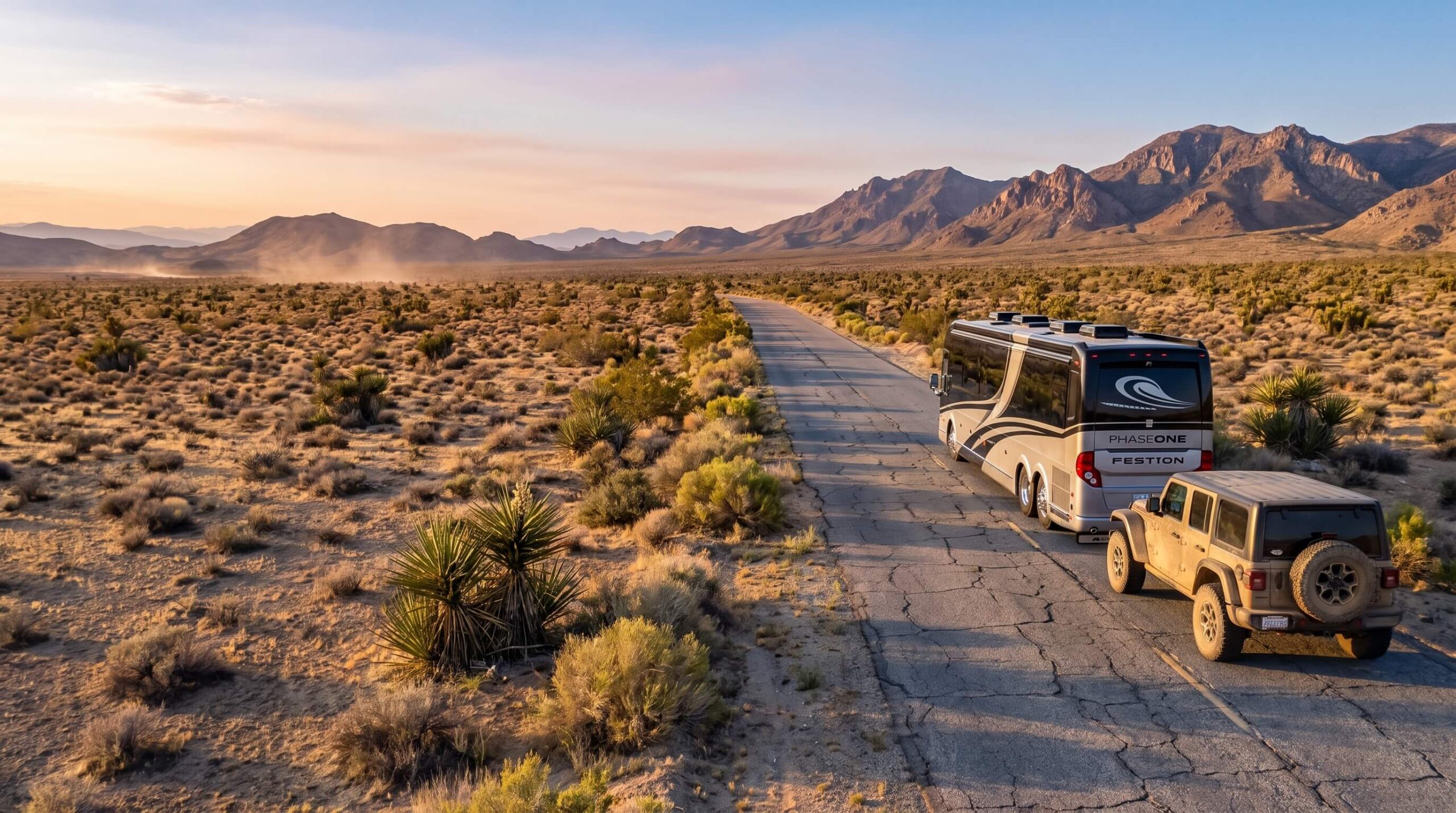
Flat towing—often called dinghy towing or four-down towing—is one of the most popular ways for RV owners to bring a second vehicle along on their travels. It allows you to park your motorhome at the campsite and still have a smaller, more fuel-efficient vehicle available for exploring nearby towns, scenic drives, and errands. Instead of driving your large motorhome everywhere, flat towing lets you unhook and go in minutes. However, you cannot simply attach a chain and start driving. Flat towing requires the correct equipment, proper setup, and a vehicle that is designed to be towed with all four wheels on the ground. This guide explains everything you need to know about flat towing behind an RV, including required equipment, the hookup process, safety tips, and the types of vehicles that work best.
What is Flat Towing?
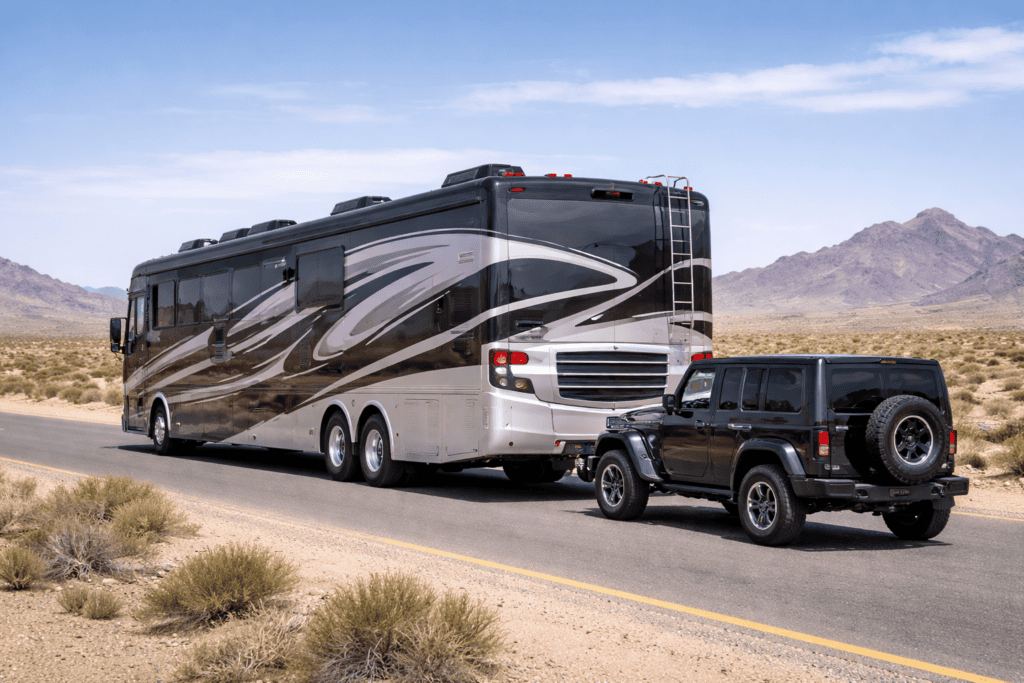
Flat towing means pulling a vehicle behind a motorhome with all four wheels of the vehicle on the ground. Unlike a trailer or tow dolly, the towed vehicle rolls freely behind the RV while connected by a tow bar. This method is especially popular among RV owners because it is:
• Quick to connect and disconnect
• Lighter than towing with a trailer
• Easy to store when not in use
Flat towing is easiest with vehicles that have manual transmissions or transfer cases that can be shifted into neutral, allowing the drivetrain to rotate without damaging the transmission. However, new technologies with software integration and eCVT transmissions have added new options for the RV enthusiats. Many RV travelers refer to the towed vehicle as a TOAD or dinghy vehicle. At RVToad, we have a great resource to browse flat towable vehicles → See our complete list of flat towable vehicles
Confirm Your Vehicle Is Flat Towable
Not every vehicle can be safely flat towed. Many modern vehicles—especially those with automatic transmissions or CVT drivetrains—rely on the engine running to circulate transmission fluid. If the engine is off while the wheels are turning, serious damage can occur. In some cases, a transmission can fail within just a few miles of towing incorrectly. Before you consider dinghy towing a vehicle ALWAYS Check the Owner’s Manual.
Look for a section labeled:
• Recreational Towing
• Towing Behind a Motorhome
• Dinghy Towing
Manufacturers will specify whether the vehicle can be towed four-down and what preparation steps are required.
Common Vehicles That Can Be Flat Towed
Some of the most popular flat tow vehicles include:
• Jeep Wrangler
• Chevrolet Equinox
• Ford Maverick Hybrid
• Ford Bronco
• Jeep Cherokee
• Chevrolet Colorado 4WD
These vehicles are commonly used because their drivetrains allow the transfer case or transmission to be placed in a neutral towing mode. They also provide good utility when you are at home base, allowing for picking up supplies, taking bicycles to trails, and exploring national parks. We have many other resources to research vehicles but if you are ready to buy a towed vehicle, check the vehicle listings that are available in the BUY A TOAD Section.
Essential Equipment for Flat Towing 
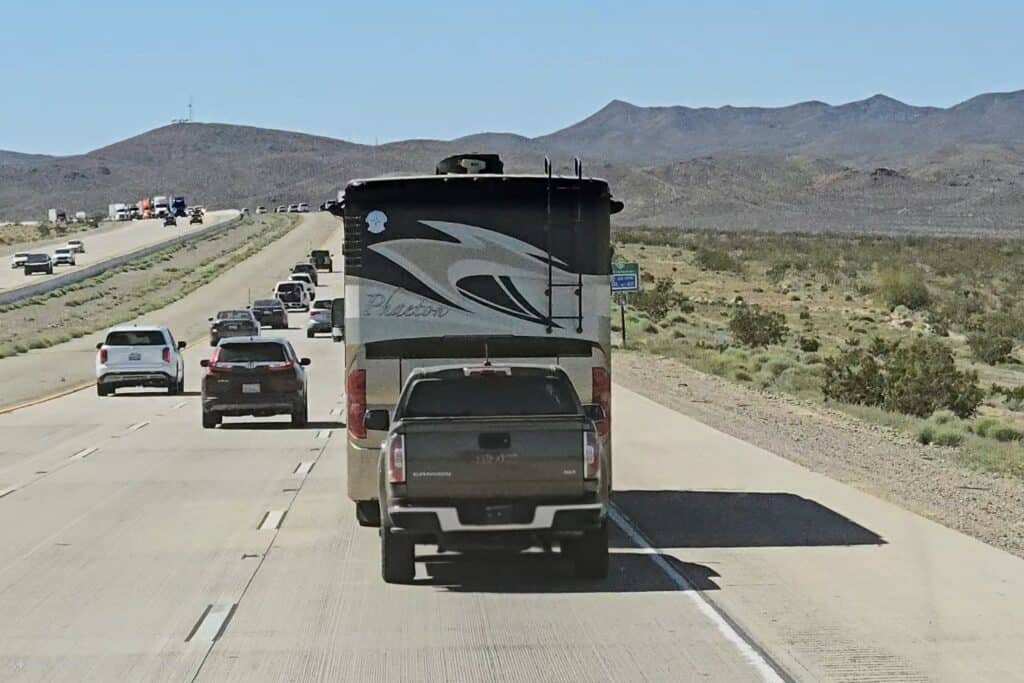
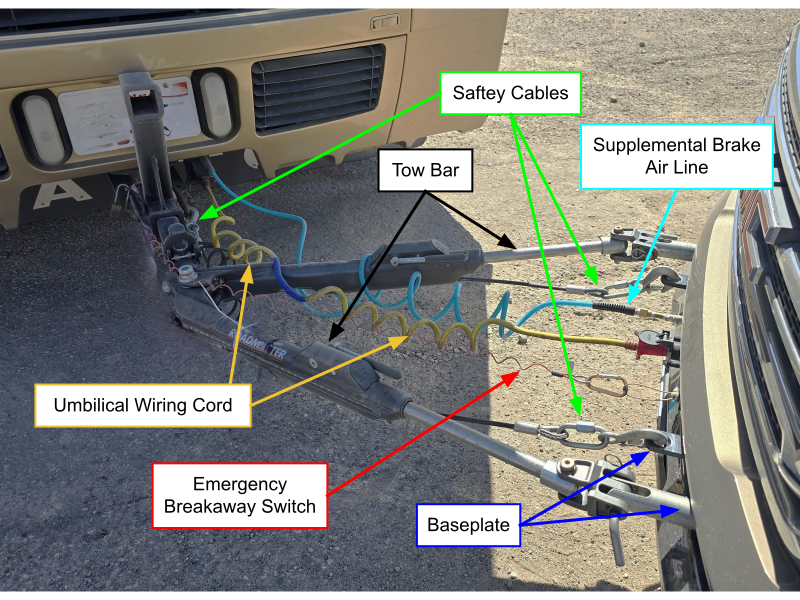
To safely tow a vehicle behind your RV, you will need several key components. Each piece of equipment plays an important role in keeping the towed vehicle secure and functioning properly on the road. See the labels on the image below to view an air brake system hooked up with all the flat tow equipment.
Tow Bar
The tow bar connects the motorhome’s hitch receiver to the towed vehicle. It acts as the primary structural link between the RV and the car. Most modern tow bars are non-binding RV-mounted and fold upward on the back of the motorhome when not in use. Some of our top choices are: Roadmaster Sterling Tow Bar, Blue Ox Avail Tow Bar, and E-trailer SD Non-Binding Tow Bar.
Base Plate
The base plate is a vehicle-specific mounting bracket that bolts directly to the frame of the towed vehicle. It provides secure attachment points for the tow bar arms. Base plates are designed specifically for each vehicle model and typically remain installed permanently. Again top Brands being Roadmaster, Blue Ox, and Curt Manufacturing.
Safety Cables
Safety cables act as a backup connection if the tow bar ever becomes disconnected. If possible, these cables should be crossed underneath the tow bar when attaching them to the RV hitch. Crossing the cables helps prevent the tow bar from contacting the ground if it disconnects. Many complete tow bars come with them but if they do not, we suggest a high quality cable set like this Roadmaster 643 Safety Cable Set.
Tow Bar Wiring
Tow bar wiring connects the vehicle’s lights to the RV so that the towed vehicle’s brake lights, turn signals, and running lights mirror the motorhome’s signals. This ensures that drivers behind you can see when you are braking or turning. This connection can also provide a 12-volt charge circuit to the battery for vehicles that drain down the battery when being towed. There are other ways to have working lights such as adding diodes, or adding external lights, but nothing beats a direct connection to your motorhome. This Roadmaster All in One towed vehicle wiring kit provides the wiring and components to hook up the 7 pin on your motorhome to the provided 6 pin at the towed vehicle.
Supplemental Braking System
A supplemental braking system activates the brakes in the towed vehicle whenever the RV slows down. These systems dramatically improve stopping distance and reduce wear on the motorhome’s braking system. Most states require a supplemental braking system when towing a vehicle behind a motorhome. There are many different ways to activate the Towed Vehicle Brakes. For a better breakdown, check out our article on Supplemental Brake Systems.
Step-by-Step: How to Hook Up a Flat Tow Vehicle
Once your vehicle is equipped with the proper hardware, connecting it to your RV becomes a simple process.
Step 1: Align and Attach the Vehicles
Park both the RV and the towed vehicle on a level surface. Pull the vehicle directly behind the motorhome, leaving about 3–4 feet of space between the two. Extend the tow bar arms and attach them to the base plate using the provided pins. Secure the pins with linchpins or cotter pins to ensure they cannot slide out. This is where the non-binding tow bars come into play. Each arm can be different lengths when hooking up, and when you pull away the arms extend to lock into place. Then on disconnection the release lever with lift the cam to eliminate the tension of the vehicle weight.
Step 2: Prepare the Transmission
This is the most critical step. Every vehicle has a slightly different process, so you must follow the owner’s manual instructions exactly. In the case of a Jeep Wrangler the steps are:
- With the engine on, park on level ground behind the motorome, and hold the brake pedal
- Shift the transmission into Neutral (N)
- Turn the engine off, then shift the Transfer Case in Neutral (N)
- Start the engine, then shift the transmission into Reverse (R) and make sure the vehicle does not move, then repeat in Drive (D)
- Turn the engine off, Apply the parking brake
- Shift an automatic transmission into Park (P) or a manual transmission into 2nd Gear
- Attach the vehicle to the motorhome with a tow bar
- Release the parking brake and you are ready to tow
Step 3: Connect Lights and Electrical System
This step depends on how you set up your lights and signals. If you have installed a diode system then you can directly hook up the power from the 7-pin connector to the vehicle side lights (like a trailer). The diode prevents any interference and backfeeding from the lights to the vehicle electrical system. If you use separate lights, you will need to attach them to the vehicle and connect the power to them. Check to make sure that running lights, brake lights, and turn signals are all working prior to hitting the road.
If your vehicle requires a charge while driving, make sure the connection is strong. Check to make sure the battery is getting charge, otherwise, you could end up with a dead battery when you arrive at your destination.
Step 4: Connect the Supplemental Braking System
Next, set up the supplemental braking system. If you are using a portable braking unit, position it firmly against the driver’s seat and attach it to the brake pedal according to the manufacturer’s instructions. If you are using an air system, make sure you firmly engage the air line and don't have any leaks. If you use an electical signal based system, make sure the power is coming into the brake system. Double check that all your connections look solid and will not come loose or chafe as you bounce down the road.
Step 5: Perform a Pull Test
Before entering the highway, perform a quick pull test. Slowly drive the RV forward while another person watches the towed vehicle. Confirm that:
• All four wheels are rolling freely
• The steering wheel turns naturally
• The tow bar arms lock into position
This final check ensures everything is functioning correctly before you begin your trip.
Pro Tips for Safe Flat Towing
Flat towing is safe and reliable when done correctly. These tips can help prevent common issues.
Never Back Up While Flat Towing
Unlike a trailer, a flat-towed vehicle cannot pivot properly when backing up. Attempting to reverse can cause the vehicle’s wheels to turn sharply and damage the tow bar or base plate. If you find yourself in a tight situation, disconnect the vehicle first before backing up.
Check Your Lights at Every Stop
Whenever you stop for fuel or rest breaks, perform a quick walk-around inspection. Confirm that:
• Safety cables remain secure
• Electrical connections are still plugged in
• Brake lights and turn signals are functioning
Monitor Tire Pressure
Because the towed vehicle is behind the motorhome, it can be difficult to notice problems immediately. Many RV owners install a tire pressure monitoring system (TPMS) on their towed vehicle (and their motorhome) to detect tire failures early. This helps with peace of mind when all tires are at their proper inflation, and can help signal issues early when a tire pressure goes up or down unexpectedly. Our Favorite system at RVToad is the TireMinder A1AS with 10 transmitters because it can show all 10 tires at the same time and does not need to switch back and forth between toad and motorhome. Other affordable options are the TireMinder i10, the TST 507 TPMS (Do not forget to add the additional 4 cap tire pressure sensors for the dinghy vehicle), and the GUTA tpms with 10 sensors.
Frequently Asked Questions About Flat Towing
Can any car be flat towed?
No. Many vehicles with automatic transmissions or CVT drivetrains cannot be flat towed because the transmission requires the engine to circulate lubrication. Always check the owner’s manual. Use our Flat Tow Vehicle Database to see which vehicles are flat towable. If you have a vehicle you want to bring that cannot be flat towed, you must use a flatbed trailer (4 wheels off the ground) or tow dolly (2 wheels off the ground).
Do you need a braking system to flat tow?
In most states, yes. Supplemental braking systems are required when towing a vehicle behind a motorhome because they help reduce stopping distance and improve safety. To learn more see our post on Supplemental Braking Systems.
What is the easiest vehicle to flat tow?
Vehicles with a manual transmission or a mechanical transfer case that can shift into neutral are often the easiest to tow. Jeep Wranglers are among the most popular flat tow vehicles because they are simple to prepare and widely supported with aftermarket towing equipment. Browse Jeep Wrangler flat tow vehicles
Can you back up while flat towing?
The short answer: No. A flat-towed vehicle cannot be safely backed up while connected to the motorhome. Always disconnect the vehicle first before reversing. The long answer is a very small amount of reversing (a couple feet) is usually okay but every time you back up you risk the toad wheels turning sharp and damaging your baseplate or tow bar.
Check out additional resources on RVToad
Flat towing adds an incredible level of flexibility to the RV lifestyle. Instead of driving a large motorhome everywhere, you can quickly disconnect your TOAD and explore with ease. If you are looking for a vehicle that can be flat towed behind a motorhome, you can browse listings specifically selected for RV travelers.
Browse flat tow vehicles for sale →
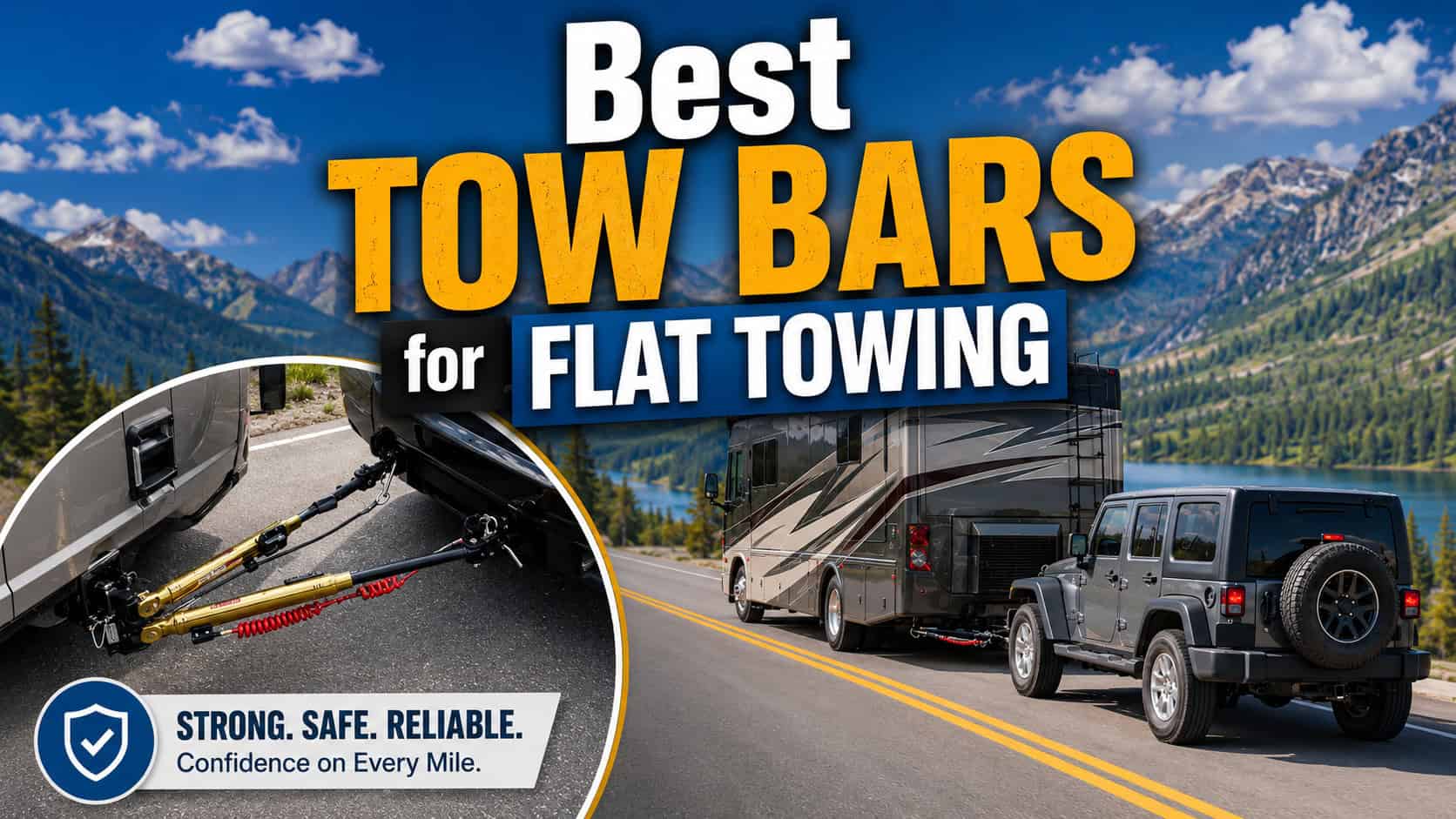
The Best Tow Bar for your flat towing situation
Understand all the terms with our Flat Towing Glossary
Research options to Protect Your Tow Vehicle behind your motorhome
Products Worth Buying for the Camping Season
ENJOY YOUR TRAVELS! -From the RVToad Team