KEY MECHANICAL TAKEAWAYS: AT A GLANCE.
100% Factory Service Manual Verification: Never rely on dealership sales talk or unverified forum threads. Every transfer case disengagement sequence must match verified OEM service bulletins.
Mandatory Proportional Braking Compliance: Supplemental breakaway braking systems are legally mandated across North America to synchronize stopping power, prevent coach brake overheating, and protect against highway breakaway disconnects.
GCWR & Class IV/V Hitch Protection: Always verify your vehicle's actual CAT scale curb weight against your motorhome's Gross Combined Weight Rating to maintain a 15% safety buffer.
Certified Frame-Mounted Hardware: Ensure your tow bar, baseplate steel tabs, and safety cables share matching Class IV (5,000 lbs) or Class V (10,000 lbs) load ratings.
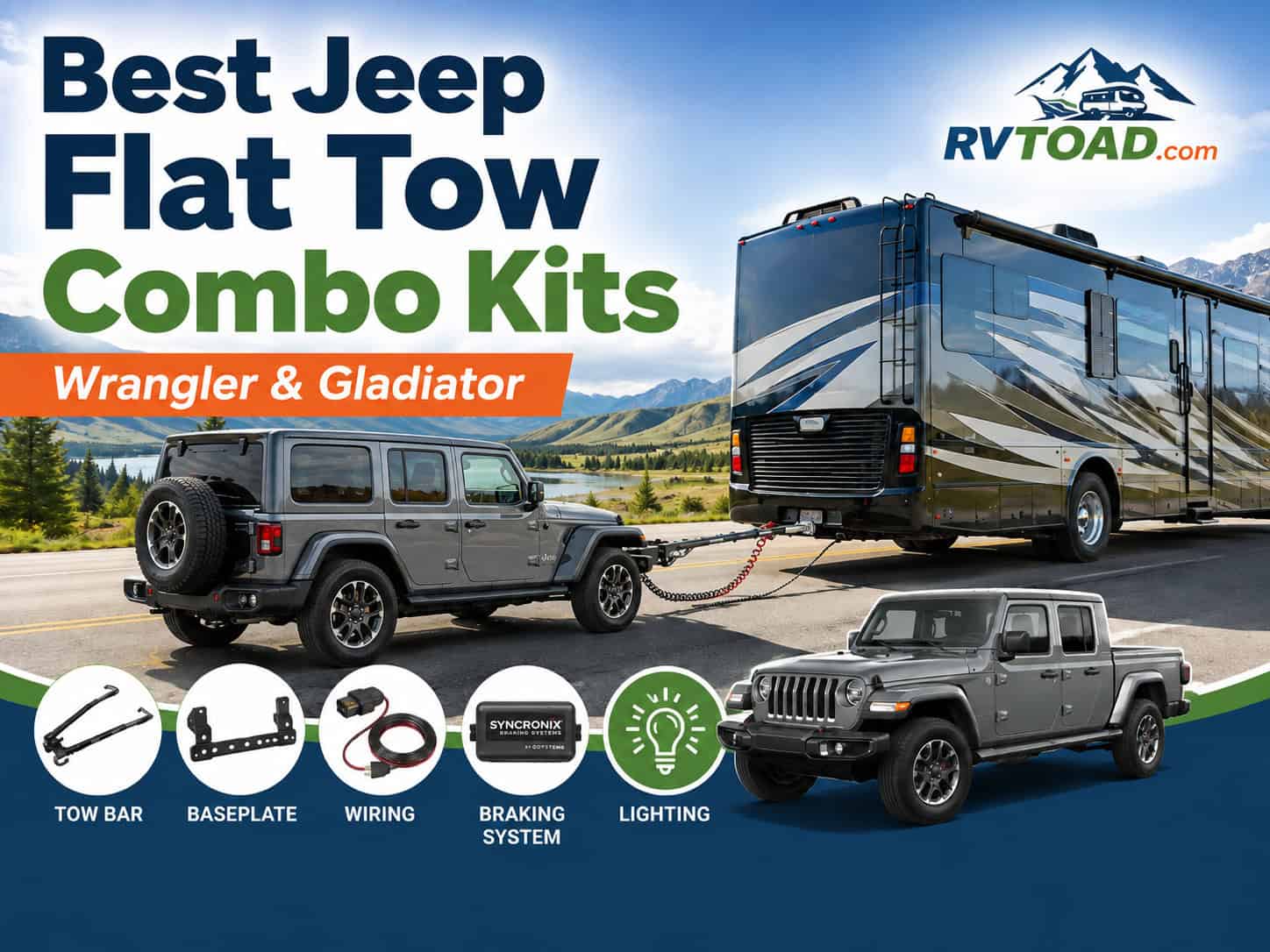
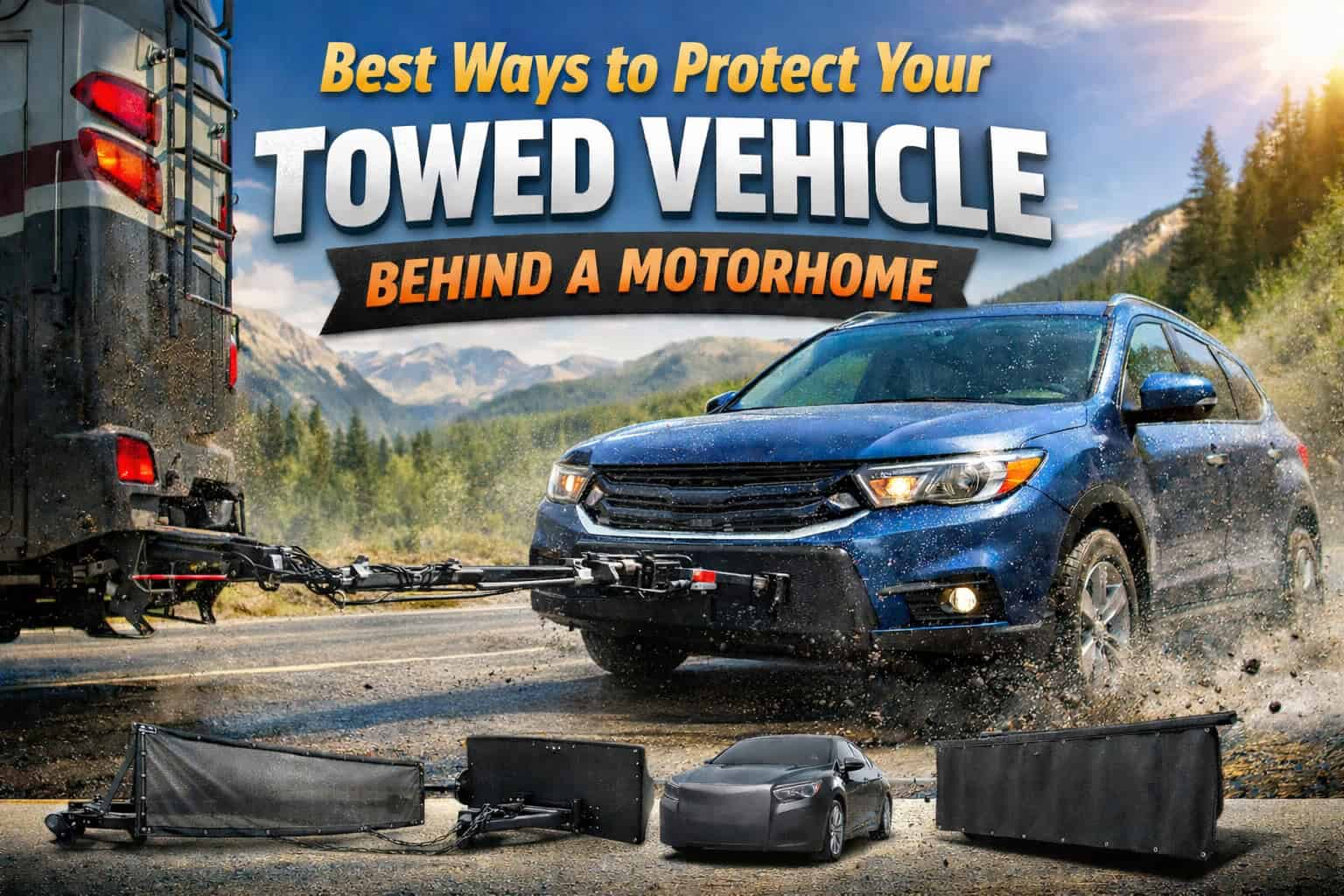
When you flat tow a vehicle behind your motorhome, you gain a lot of freedom once you get to camp. Your tow vehicle makes it easy to explore, run errands, visit trailheads, and enjoy the area without having to move the whole coach. But while your toad is following behind, your tow vehicle can be exposed to rocks, gravel, road spray, mud, tar, and other debris kicked up by the motorhome and the highway itself. Sometimes that means a dirty front end. Other times it can mean chipped paint, pitted headlights, damaged trim, or even a cracked windshield.
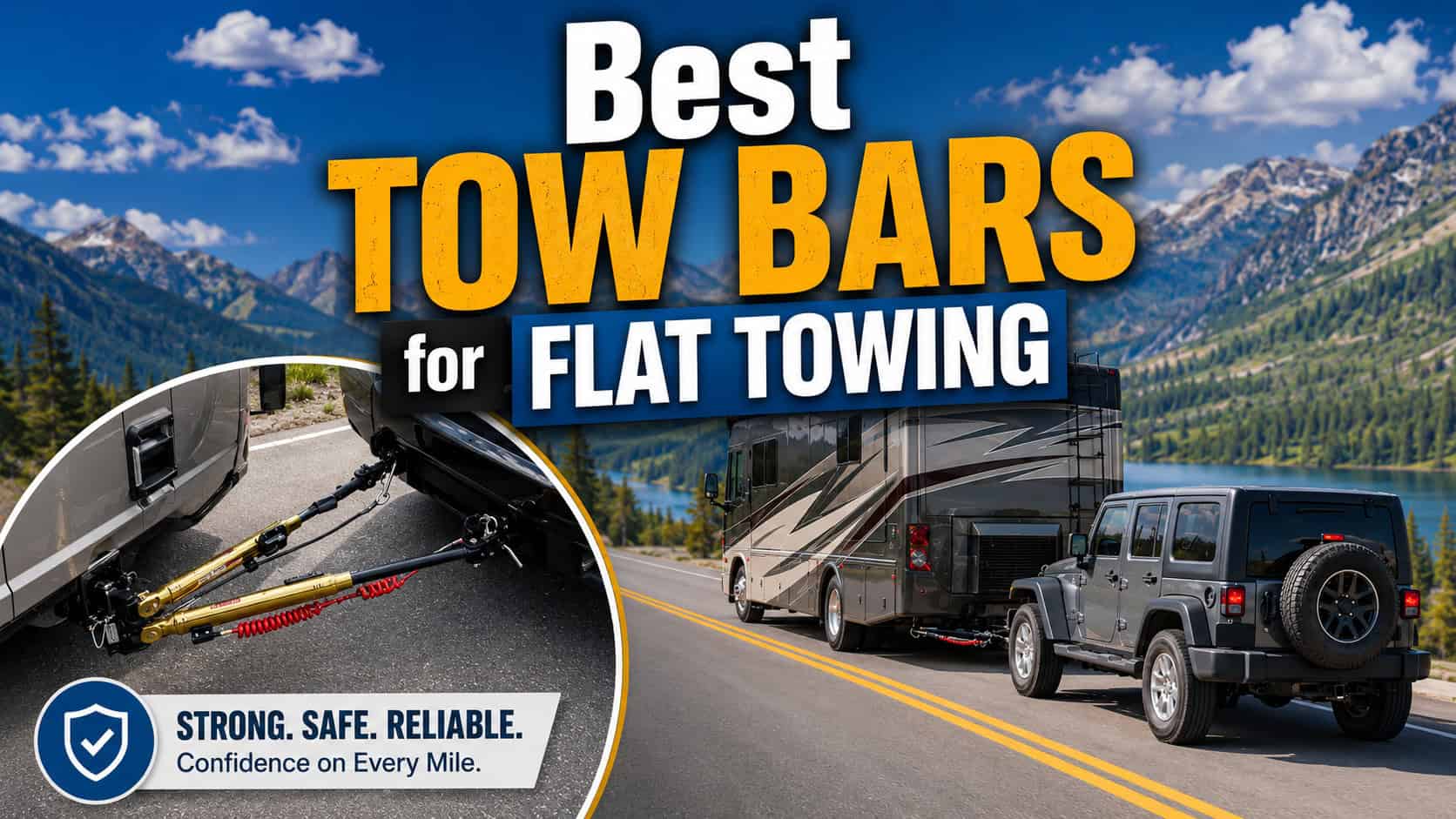
If you already invested in a tow bar, baseplate, wiring, and supplemental braking system, it makes sense to also protect the vehicle you are towing. The right setup can help reduce damage, preserve resale value, and make every travel day a little less stressful. In this guide, we will cover the main types of tow vehicle protection, the pros and cons of each, and several products worth considering in each category. NOTE: This post contains affiliate links; RVToad may earn a commission if you make a purchase through these links at no extra cost to you.
Why Tow Vehicle Protection Matters
Your tow vehicle sits directly behind a large motorhome, which means it can take the hit from anything thrown backward off the coach or the road. Road debris can strike the front bumper, grille, hood, windshield, headlights, mirrors, and even exposed tow gear.
Without protection, common problems can include:
- Rock chips on paint and trim
- Windshield chips or cracks
- Heavy road grime buildup
- Extra abuse on exposed tow bar components, wiring, and cables
Screen systems and rock shields are specifically marketed to deflect rocks, gravel, mud, and other debris away from the towed vehicle, and some also help protect the tow bar, camera, harness, and safety cables.
1) Screen-Style Tow Vehicle Protection
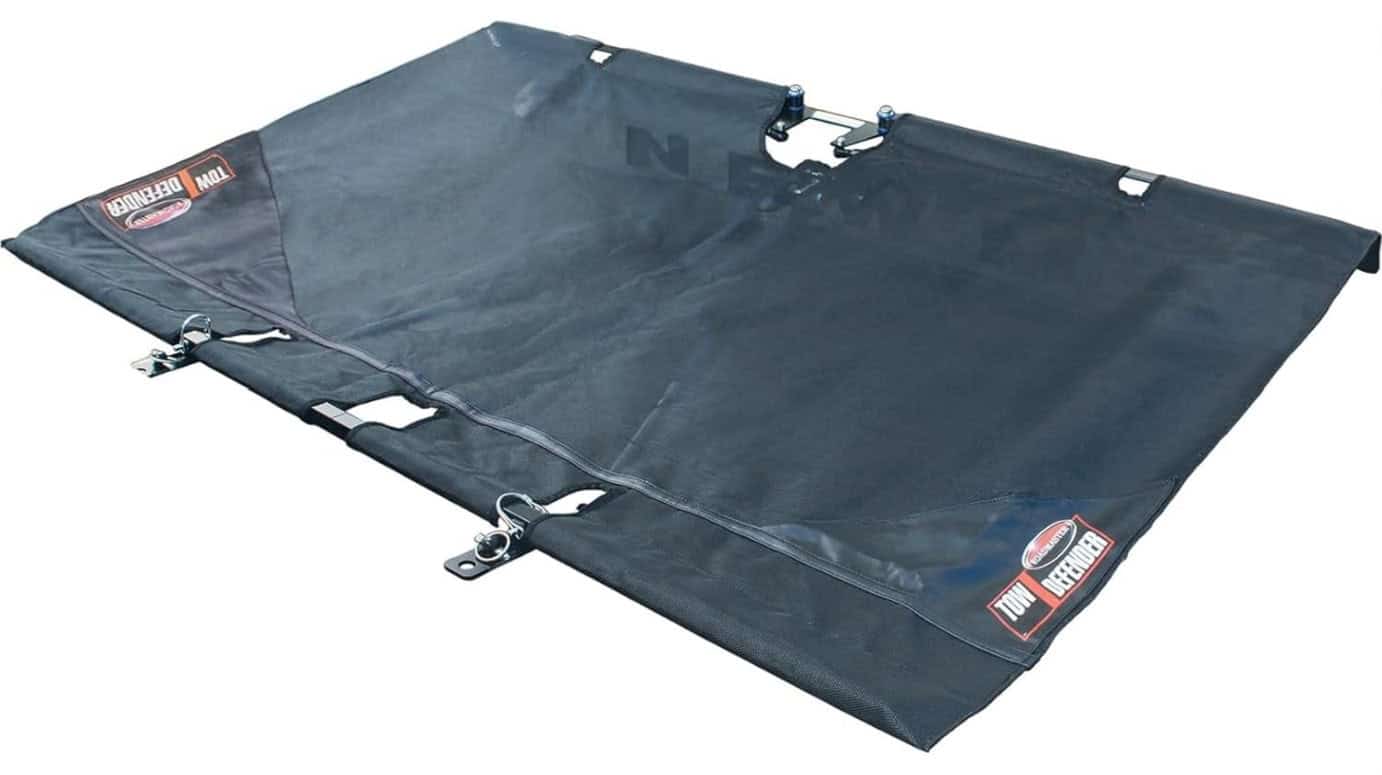
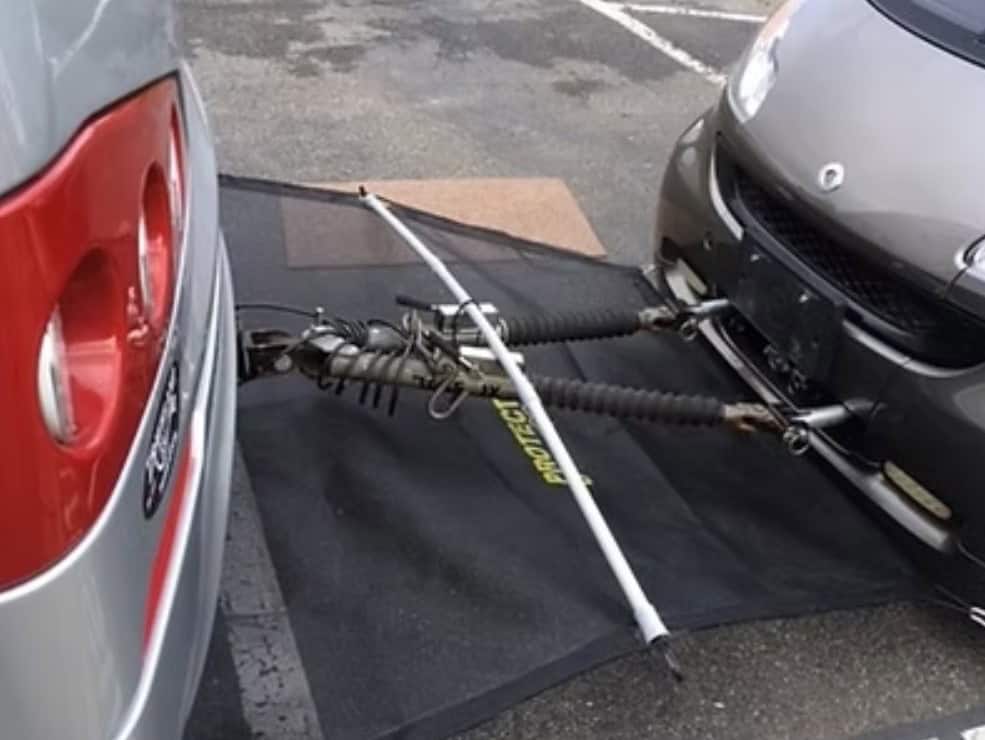
Screen-style systems use a heavy-duty mesh or fabric barrier between the motorhome and the tow vehicle. Their job is to catch and push debris downward before it can bounce into the front of the toad. This category is a favorite for RVers who want broad coverage without a large rigid shield.
Why this type is appealing
A screen-style system can give you wide protection while still being lighter and easier to store than a hard panel shield. Roadmaster says the Tow Defender uses a heavy-duty screen to deflect rocks, gravel, and road debris down and away from the towed vehicle, protecting the finish, headlights, and windshield. Protect-A-Tow similarly says its system protects the towed vehicle and motorhome from stones, mud, and flying debris, and also shields the tow bar, back-up camera, wiring harness, and safety cables.
Pros
- Broad coverage between coach and toad
- Lighter than many rigid shields
- Easier storage in many setups
- Can help protect the tow bar area too
Cons
- Proper sizing and fitment matter
- May require brand-specific or measurement-specific setup
- Does not give the same hard barrier feel as a rigid rock shield
RVToad's Choice: Roadmaster Tow Defender
RVToad's Choice: Protect-A-Tow
2) Rigid Rock Shields
Rigid rock shields use a hard panel mounted near the tow bar to create a physical barrier in front of the towed vehicle. This category is often attractive to RVers who want a stronger front-line shield against debris.
Why this type is appealing
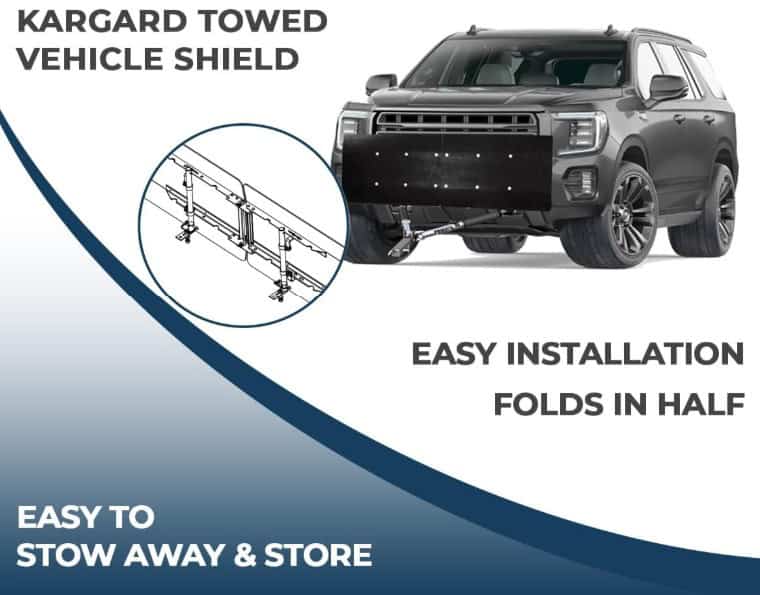
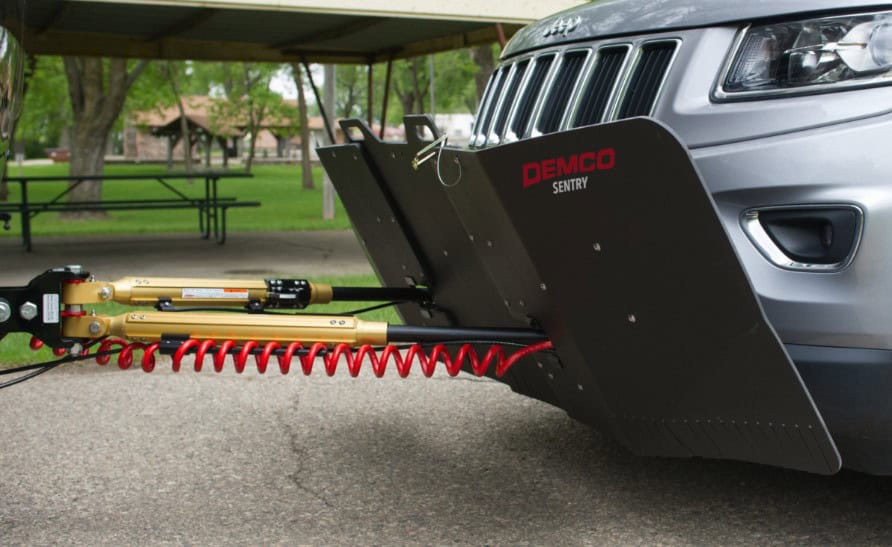
A rigid rock shield can feel more substantial than a fabric screen, especially if most of your towing is on highways or rougher roads. Current products in this category commonly use polyethylene panels and foldable or sectional designs. The Blue Ox KarGard uses a polyethylene shield and folds for storage, while the Demco Sentry Deflector also uses high-density polyethylene which mounts to brackets on the tow bar arms.
Pros
- Strong physical barrier
- Good lower-front-end protection
- Durable material construction
- Some designs fold or lock together for storage
Cons
- Bulkier than screen-style systems
- Compatibility matters
- Some vehicle manuals may restrict certain vertical shield styles
RVToad's Choice: Blue Ox KarGard Protective Shield
RVToad's Choice: Demco Sentry Deflector
3) Custom Front Car Shields
Custom front covers attach directly to the towed vehicle instead of mounting primarily on the tow bar. This type of protection is appealing for RVers who want the vehicle itself covered more directly. Most of these are made specifically to your vehicles. The best example is Coastline manufacturing who offers Car, SUV, and Truck Tow car shields HERE.
Pros
- Direct coverage on the vehicle itself
- Can protect a broad painted front area
- Tailored fit can look cleaner and more intentional
Cons
- Requires install and removal at stops
- Needs a good fit
- Must be kept clean so trapped grit does not rub paint
4) Rear Motorhome Mud Flaps and Splash Guards
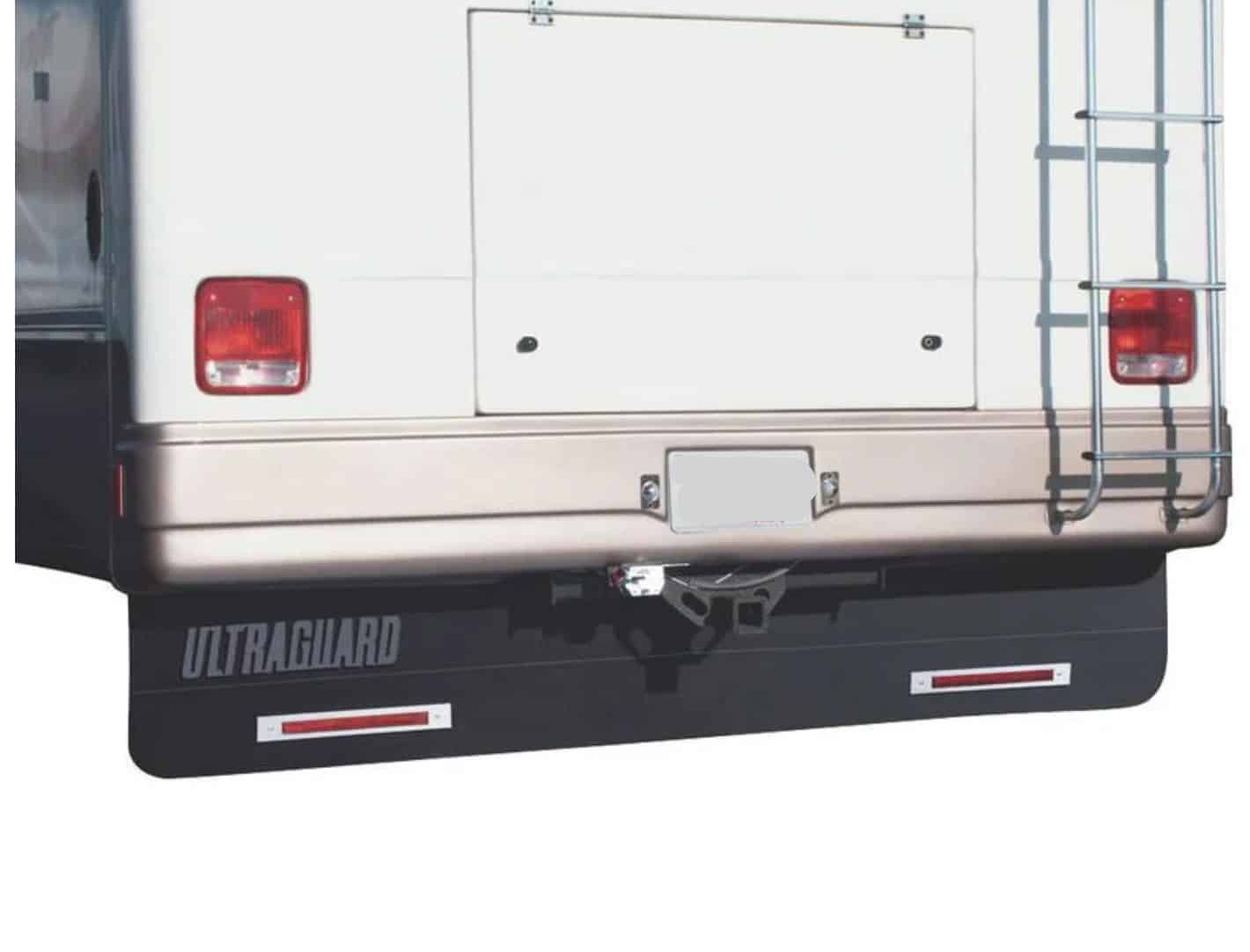
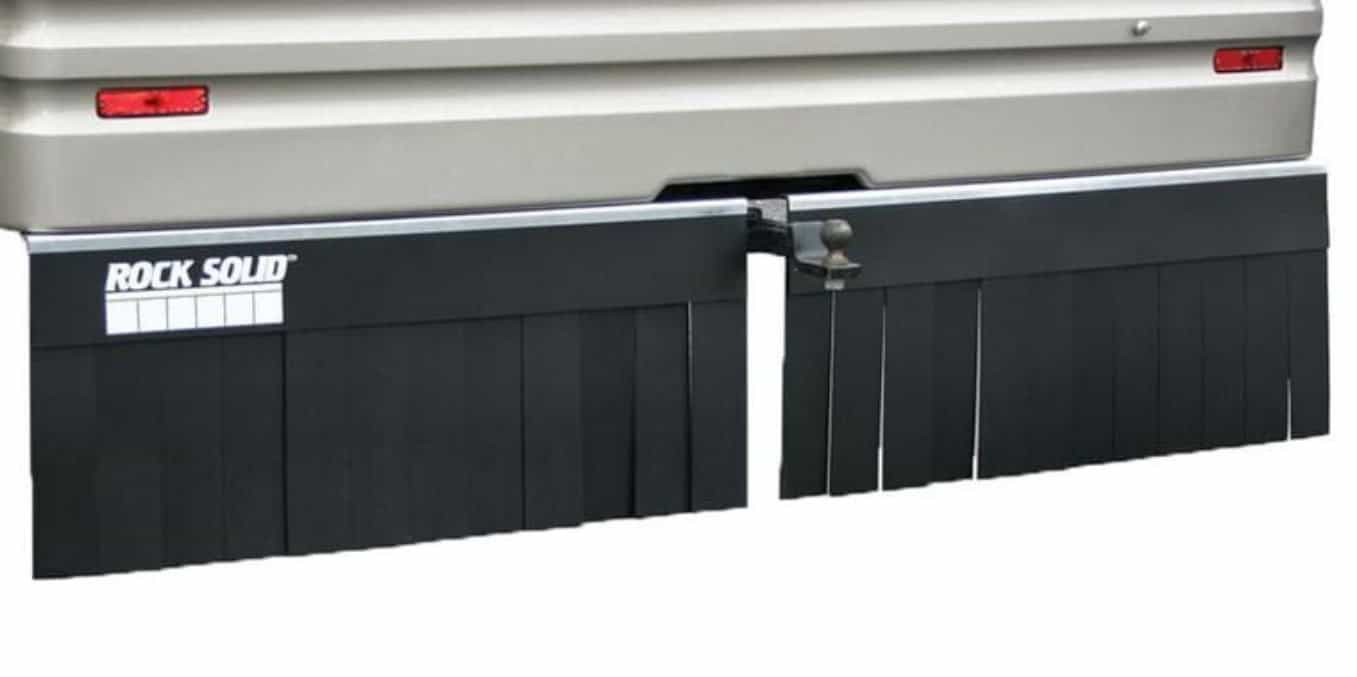
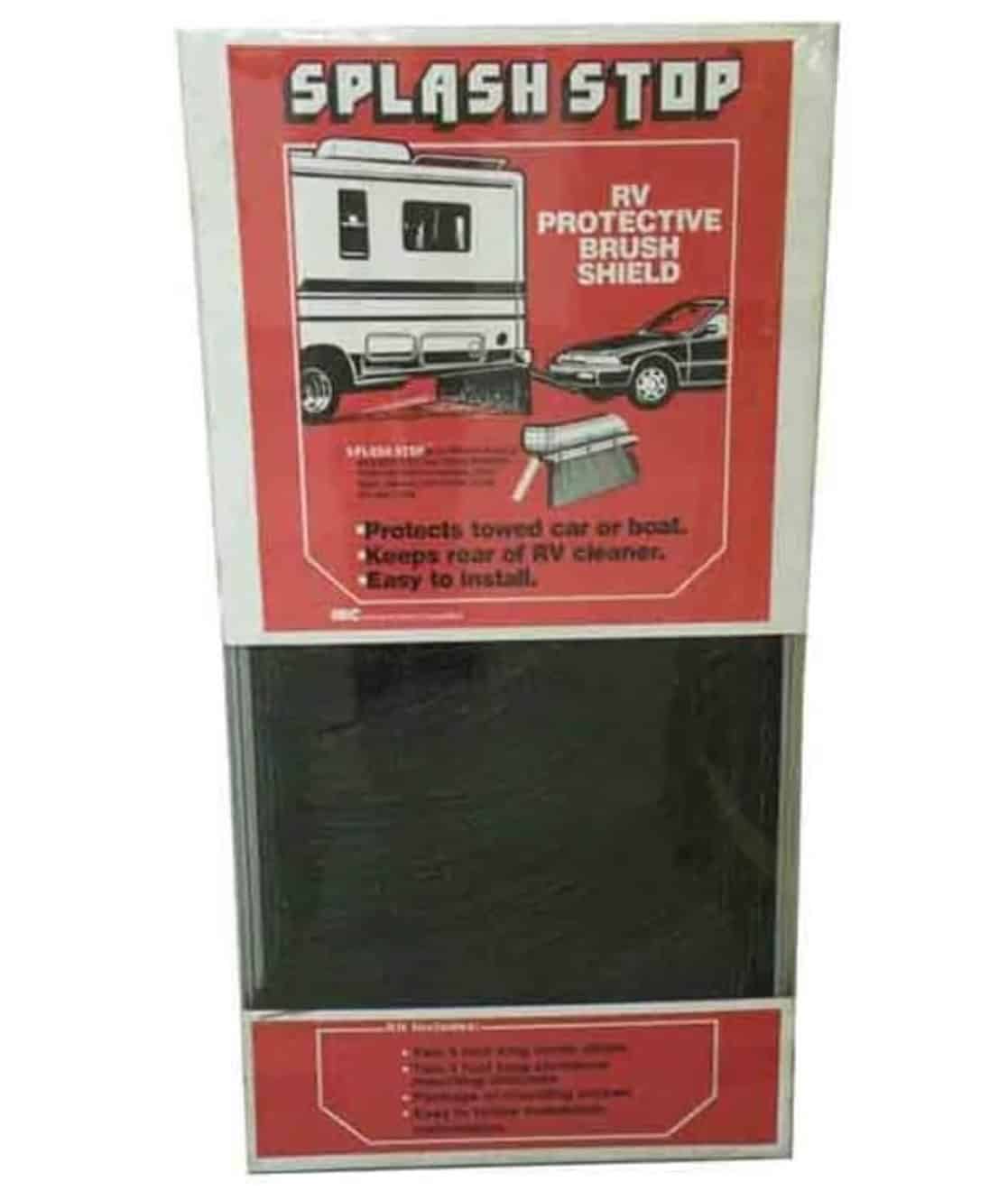
Rear mud flaps and splash guards are mounted on the back of the motorhome and aim to reduce debris being thrown toward the towed vehicle in the first place. This category works best as a supporting layer. It may help reduce some debris before it ever reaches the tow vehicle, but it is usually not the only protection most RVers want. For custom made mud flaps, check out the experts at DuraFlap. For off the shelf options, see the units below from Smart Solutions and IBC.
Pros
- Helps reduce some debris at the source
- Can complement a screen or rigid shield
- Useful extra layer for travel days
Cons
- Usually not enough by themselves
- Effectiveness depends on coach height and installation
- Better as part of a layered protection strategy
5) Paint Protection Film (PPF)
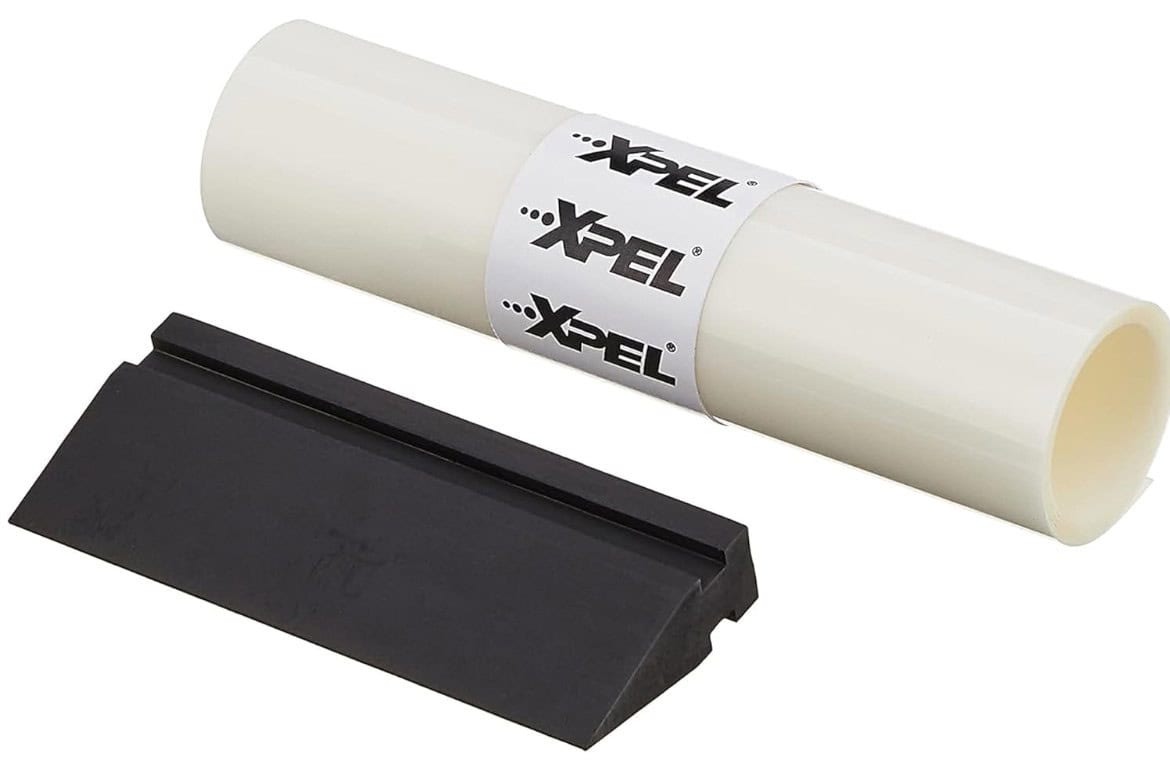
Paint protection film is not a towing-specific accessory, but it can still be a smart supporting option for RVers who want extra protection for the front of their toad.
Why this type is appealing
PPF helps protect painted surfaces directly and keeps working whether the vehicle is being towed or driven normally. It is best thought of as supplemental protection, not a replacement for a real debris shield.
Pros
- Nearly invisible
- Protects paint directly
- Useful during everyday driving too
Cons
- More expensive than many towing accessories
- Requires professional installation
- Not a substitute for a tow shield on its own
Quick Comparison: Which Type of Protection Is Right for You?
| Protection Type | Best For | Main Benefit | Main Tradeoff |
|---|---|---|---|
| Screen-style shield | RVers wanting broad coverage with easier storage | Lightweight, wide protection | Must fit with Towbar and Vehicle |
| Rigid rock shield | RVers wanting a hard barrier | Strong front-line defense | Bulkier setup, harder to store |
| Custom front cover | Owners wanting direct vehicle coverage | Tailored paint protection | More setup/removal and leadtime |
| Rear mud flap / splash guard | Supporting protection layer | Reduces some debris early | Keeps most debris out, but not all |
| Paint protection film | Cosmetic long-term protection | Invisible and always on | Pro Install on vehicle, partial protection |
The RVToad Recommendation
For most long haul RVers, the smartest move is to think in layers. A screen-style shield like the Tow Defender or Protect-A-Tow makes a lot of sense if you want wide protection from the road, easy on off, and slimmer storage. A rigid shield like the Blue Ox KarGard or Demco Sentry Deflector may be a better fit if you want a harder barrier in front of the vehicle. To start with a simple, inexpensive option the Smart Solutions Rock Solid is a great option to stop the big debris from getting to the back of your motorhome tow vehicle. Then, if you really want to protect the finish, adding PPF or another cosmetic protection layer can help reduce long-term paint wear.
That layered approach is often the best blend of real-world protection and practicality. The current products in these categories are explicitly marketed around reducing damage from rocks, gravel, mud, and road debris while flat towing.
FAQ
Do I need tow vehicle protection when flat towing?
Not everyone uses it, but it is a smart idea for many RVers. If you tow often, drive long distances, or travel through construction zones and rough roads, protection can help reduce paint chips, grime, and windshield damage on your TOAD.
What is better: a screen-style shield or a rigid rock guard?
A screen-style shield is often lighter and easier to store. A rigid shield gives you a harder barrier in front of the vehicle. The better choice depends on your setup, storage space, and preferences.
Will mud flaps alone protect my tow vehicle?
They do protect much of the large debris from passing through and help as an extra layer, but most RVers who want stronger protection use them alongside a screen or shield.
Is the Tow Defender a hard shield?
No. Roadmaster describes it as a heavy-duty screen that deflects rocks, gravel, and road debris down and away.
Is Protect-A-Tow lightweight?
Yes. Protect-A-Tow markets it as lightweight and says it stores in a compact case after use.
Does Blue Ox KarGard fold for storage?
Yes. Blue Ox says the KarGard folds for storage.
Does the Demco Sentry Deflector require drilling?
Yes, Demco states that installation requires some drilling. The Sentry is Towbar Mounted, so depending on the width of the baseplate mounting clevis, the center section gets drilled to attach to the outer sections. You may also have to use a hole saw to create a pass through for wiring and safety cables.
Final Thoughts
Your tow vehicle is supposed to add convenience to RV travel, not become a magnet for rock chips and road damage. If you spend time towing behind a motorhome, protecting that vehicle is one of the more practical upgrades you can make. The good news is there is no shortage of ways to do it. Whether you prefer a Tow Defender, Protect-A-Tow, Blue Ox KarGard, Demco Sentry Deflector, or a layered approach with additional paint or splash protection, the goal is the same: arrive with less mess, less damage, and fewer repair bills.