KEY MECHANICAL TAKEAWAYS: AT A GLANCE.
100% Factory Service Manual Verification: Never rely on dealership sales talk or unverified forum threads. Every transfer case disengagement sequence must match verified OEM service bulletins.
Mandatory Proportional Braking Compliance: Supplemental breakaway braking systems are legally mandated across North America to synchronize stopping power, prevent coach brake overheating, and protect against highway breakaway disconnects.
GCWR & Class IV/V Hitch Protection: Always verify your vehicle's actual CAT scale curb weight against your motorhome's Gross Combined Weight Rating to maintain a 15% safety buffer.
Certified Frame-Mounted Hardware: Ensure your tow bar, baseplate steel tabs, and safety cables share matching Class IV (5,000 lbs) or Class V (10,000 lbs) load ratings.
RVToad Resource
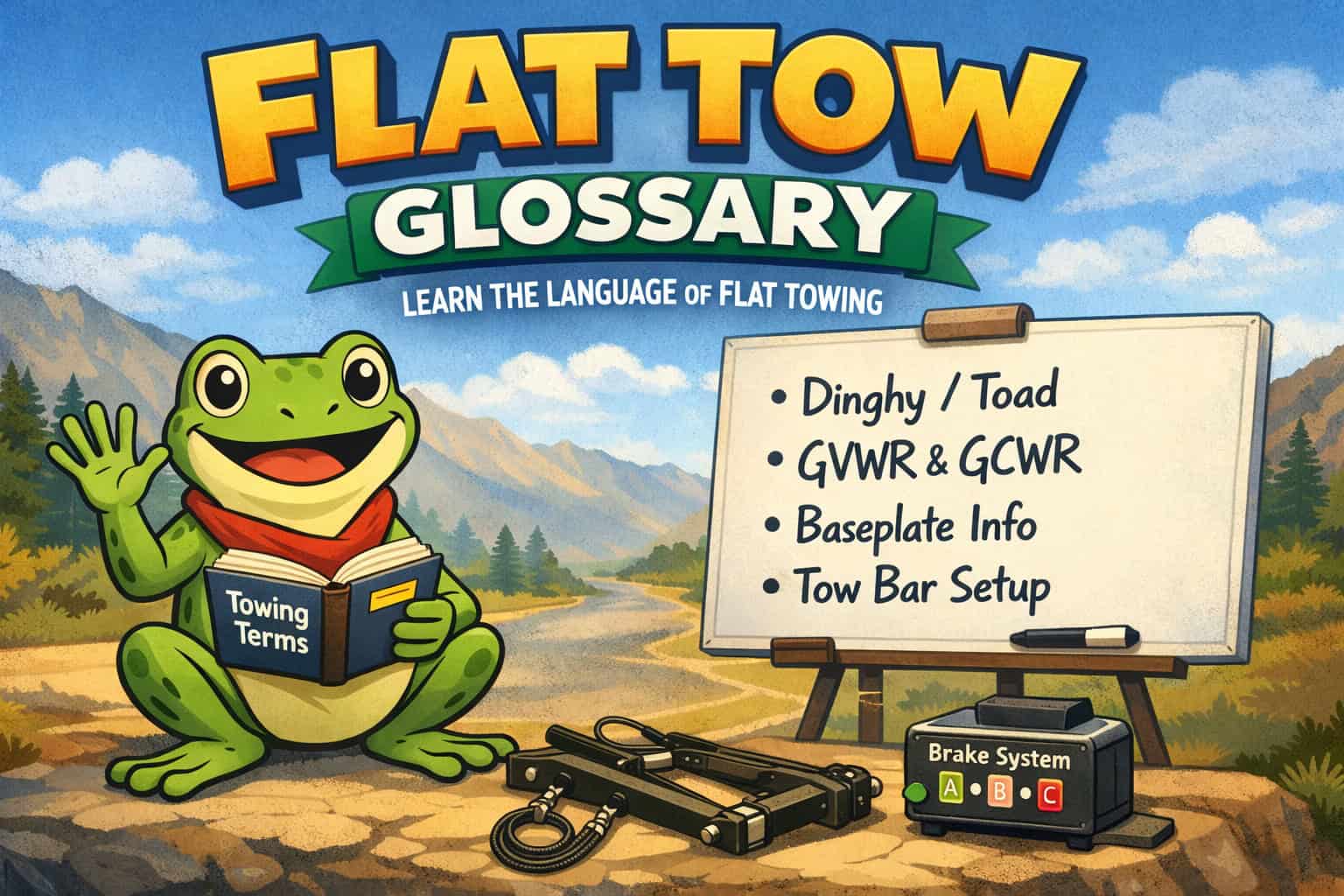
Flat Towing Glossary: Common Terms RV Owners Should Know
New to flat towing? This glossary explains the most common terms RV owners run into when researching vehicles that can be towed behind a motorhome. Use it to better understand listings, compare tow-ready setups, and learn what equipment matters most.
Important: This glossary is for general education only. Always confirm flat towing compatibility, setup requirements, and towing procedures in the owner’s manual for the exact year, make, model, drivetrain, and transmission you plan to tow.
Start with the Flat Tow Vehicle Database if you want to compare real flat towable vehicles by year, make, model, weight, drivetrain, and towing procedure.
Helpful next steps: search the database, browse flat tow vehicles for sale, or read the flat towing guide.
Baseplate
A baseplate is a vehicle-specific mounting system installed on the front frame structure of a towable vehicle. It creates the secure connection point for the tow bar. Baseplates are designed to fit a specific year, make, and model, so they are not one-size-fits-all. For Example, see these links for the differences between a Jeep Wrangler JL Baseplate, Honda CR-V Baseplate, Chevy Colorado Baseplate, Ford Maverick Hybrid Baseplate, and Ford Escape Hybrid Baseplate.
Blue Ox
Blue Ox is a well-known RV towing equipment manufacturer. RV owners commonly use the name when discussing tow bars, baseplates, and supplemental braking systems. In everyday conversation, someone might say a vehicle has a “Blue Ox setup” to describe the brand of towing hardware installed. See the blow ox website for more info: https://www.blueox.com/
Charge Line
A charge line is a wire that helps maintain or replenish the towed vehicle’s battery while it is being pulled behind the motorhome. This can be helpful when the vehicle’s ignition, accessories, braking system, or other electronics draw power during towing. See this inexpensive charge line kit by Roadmaster
Curb Weight
Curb weight is the weight of a vehicle as equipped from the factory with standard equipment and fluids, but without passengers or cargo. When shopping for a dinghy tow vehicle, curb weight matters because your motorhome and towing setup must stay within safe towing limits.
Demco
Demco is another major manufacturer in the RV towing space. The brand is commonly associated with baseplates, tow bars, and supplemental braking systems. RV owners often mention Demco when comparing flat towing hardware options or discussing an existing tow-ready setup. Check out their line of products here: www.demco-products.com/
Dinghy Towing
Dinghy towing is another name for flat towing or four-down towing. It means towing a vehicle behind a motorhome with all four wheels on the ground. The term “dinghy” is commonly used in the RV world to describe the smaller vehicle being towed.
Drivetrain
Drivetrain refers to the system that delivers engine power to the wheels, including layouts such as front-wheel drive (FWD), rear-wheel drive (RWD), all-wheel drive (AWD), and four-wheel drive (4WD). Drivetrain matters for flat towing because some layouts are towable in certain configurations while others are not. Many 4WD vehicles can be flat towed when they have a transfer case with a true neutral which prevents the transmission from turning when the wheels turn.
Flat Towing
Flat towing means pulling a compatible vehicle behind a motorhome with all four wheels on the ground. It typically uses a tow bar, vehicle-specific baseplate, safety cables, lighting connection, and a supplemental braking system. Flat towing is also commonly called dinghy towing, four-down towing, or towing a TOAD.
Four-Down Towing
Four-down towing is another term for flat towing. The name simply emphasizes that all four tires of the towed vehicle remain on the road while it is being pulled behind the motorhome.
GCWR
GCWR stands for Gross Combined Weight Rating. It is the maximum allowable combined weight of the motorhome, the towed vehicle, passengers, cargo, and fluids. GCWR is an important number because it helps determine whether your coach can safely tow a particular vehicle. To find the max toad weight, you must subtract all of the above items from your GCWR.
GVWR
GVWR stands for Gross Vehicle Weight Rating. It is the maximum weight a vehicle is designed to carry, including the vehicle itself, fuel, passengers, cargo, and accessories. This is different from curb weight, which is typically lower.
Neutral Tow Mode
Neutral tow mode is a manufacturer-provided setting on some vehicles that prepares the drivetrain for recreational towing. The exact procedure varies by vehicle and may involve a sequence using the ignition, transmission controls, or drivetrain settings. Always follow the owner’s manual exactly.
Recreational Towing
Recreational towing is the term many manufacturers use in owner’s manuals for towing a vehicle behind a motorhome. If you are checking whether a vehicle can be flat towed, this is one of the most important headings to look for in the manual.
Roadmaster
Roadmaster is a major towing equipment manufacturer widely known for tow bars, baseplates, braking systems, and towing accessories. In RV conversations, a seller may mention Roadmaster to identify the brand of hardware already installed on a tow-ready vehicle. Check out their line of products here: www.roadmasterinc.com
Safety Cables
Safety cables are backup connection cables between the motorhome and the towed vehicle. They are meant to help keep the vehicle attached if the primary towing connection fails. They are typically crossed under the tow bar to form a cradle.
Supplemental Braking System
A supplemental braking system helps the towed vehicle apply its brakes while being pulled behind the motorhome. These systems improve braking performance and are commonly recommended for safety; in many areas they are also required once the towed weight reaches certain thresholds. See this article to compare options: The Best Supplemental Brake Systems for Flat Towing.
TOAD
TOAD is RV slang for a vehicle towed behind a motorhome. Some people use it as a playful acronym, while others simply use it as shorthand for the dinghy vehicle. On RVToad, the term generally refers to flat tow vehicles that RV owners research, buy, and sell. Check out what TOADS ARE FOR SALE today!
Tow Bar
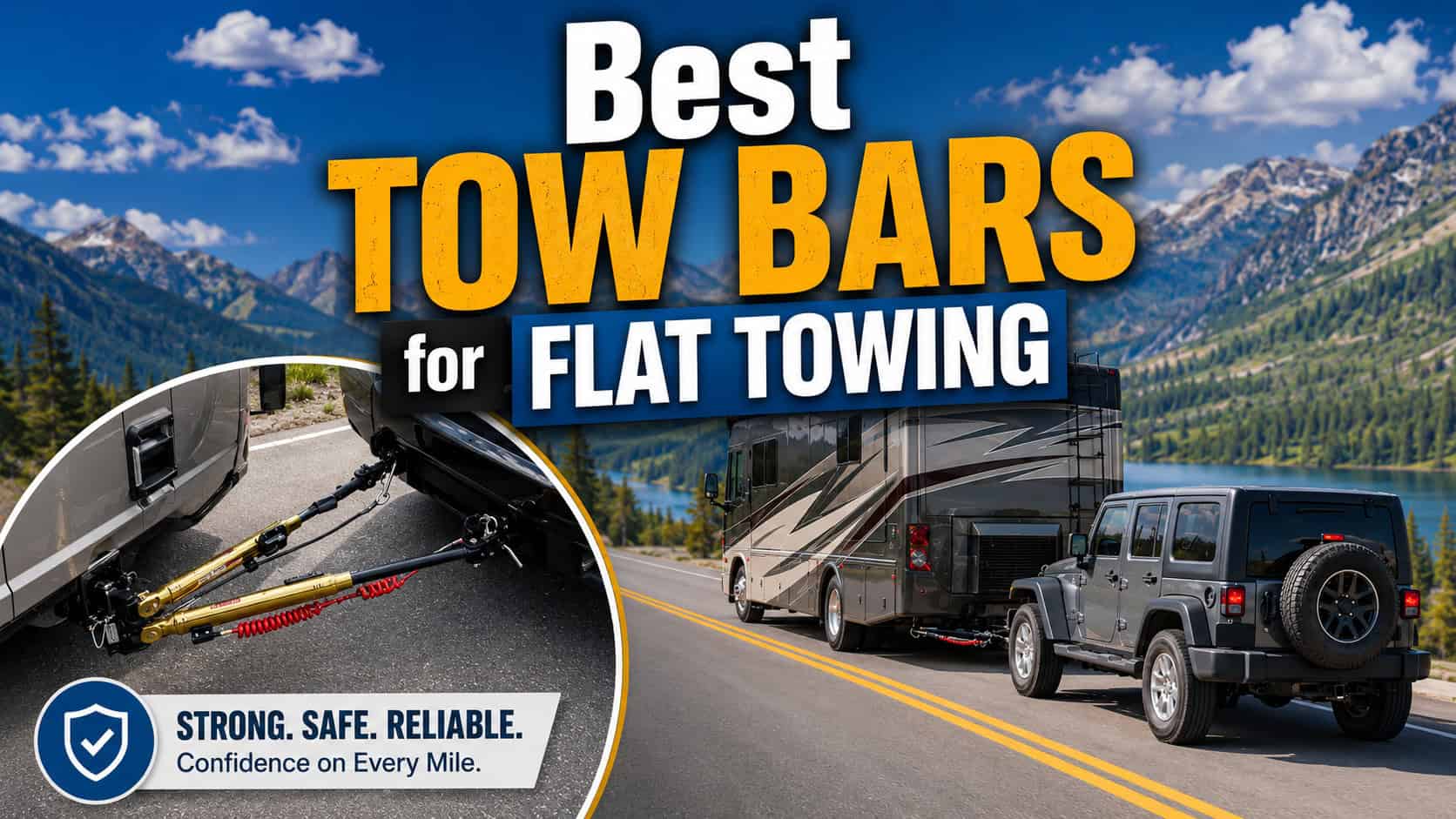
A tow bar is the main piece of hardware that connects the motorhome to the towed vehicle. In a flat towing setup, it typically attaches to the motorhome’s receiver and to the vehicle’s baseplate. Tow bars come in different weight ratings and styles, so they must be matched appropriately to the setup. Some of our top choices are: Roadmaster Sterling Tow Bar, Blue Ox Avail Tow Bar, NSA Ready Brute Elite II, and Demco Dominator Tow Bar.
Tow Dolly
A tow dolly is a small two-wheel trailer that lifts the front wheels of a vehicle off the ground while the rear wheels roll on the road. It is a different towing method from flat towing and is often used for vehicles that are not approved for four-down towing. Our top choices are: the Demco KarKaddy X, and the Demco Space Saver KarKaddy.
Tow-Ready
Tow-ready usually means a vehicle already has some or all of the equipment needed for flat towing, such as a baseplate, tow bar, wiring, or supplemental braking system. The exact meaning can vary by seller, so buyers should confirm what is actually included in the listing.
Transfer Case Neutral
Transfer case neutral is a setting available on some four-wheel-drive vehicles that disconnects the drivetrain so the vehicle can be towed without damaging major components. Not all 4WD vehicles have this feature, and the activation procedure must be followed exactly as described by the manufacturer.
Wiring Harness
In flat towing, a wiring harness or lighting connection sends turn signal, brake light, and running light signals from the motorhome to the towed vehicle. This helps the towed vehicle display proper lighting while traveling behind the coach.
Continue Your Flat Towing Research
Explore these next steps to learn more or compare real flat tow vehicles: