

KEY MECHANICAL TAKEAWAYS: AT A GLANCE.
100% Factory Service Manual Verification: Never rely on dealership sales talk or unverified forum threads. Every transfer case disengagement sequence must match verified OEM service bulletins.
Mandatory Proportional Braking Compliance: Supplemental breakaway braking systems are legally mandated across North America to synchronize stopping power, prevent coach brake overheating, and protect against highway breakaway disconnects.
GCWR & Class IV/V Hitch Protection: Always verify your vehicle's actual CAT scale curb weight against your motorhome's Gross Combined Weight Rating to maintain a 15% safety buffer.
Certified Frame-Mounted Hardware: Ensure your tow bar, baseplate steel tabs, and safety cables share matching Class IV (5,000 lbs) or Class V (10,000 lbs) load ratings.

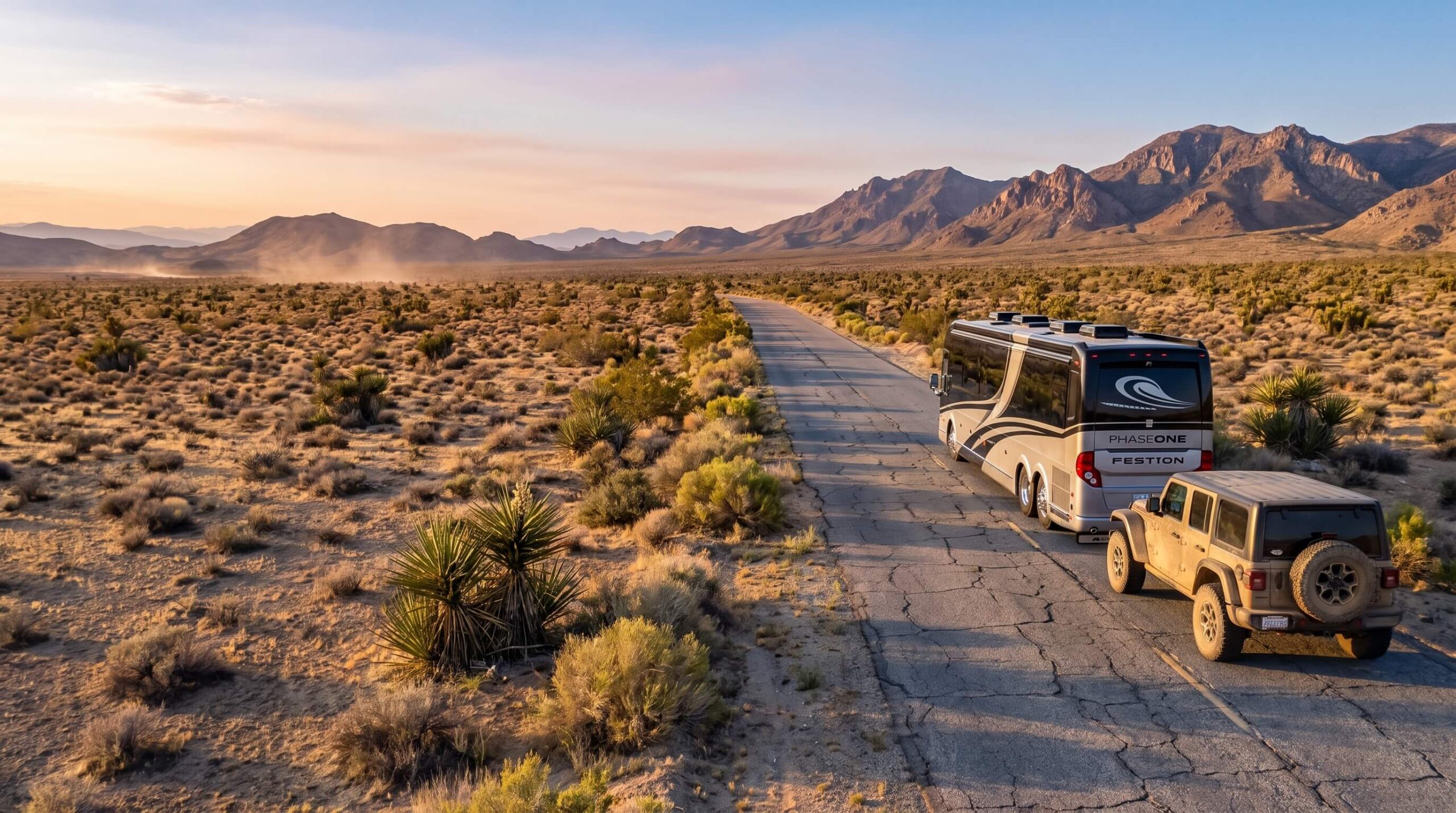
Flat towing, or "four-down" towing, allows a vehicle to be pulled behind a motorhome with all four wheels on the road. For a vehicle to be officially approved for recreational towing, the manufacturer must certify that the practice will not cause drivetrain damage or void the factory warranty. This status is crucial for the safety and mechanical longevity of the dinghy vehicle.
NOTE: Always refer to the specific vehicle's owners manual before flat towing
Technical Requirements for Safe Dinghy Towing
The primary engineering challenge in flat towing is drivetrain lubrication. In most vehicles, the internal lubrication pump is driven by the engine's input shaft; when the engine is off but the wheels are turning, the output shaft rotates without pressurized oil, leading to friction-induced failure.
Evolving Drivetrain Technologies
- Manual Transmissions: Historically the most tow-friendly due to splash-lubrication designs. Brands like Toyota and Honda primarily approve only manual-transmission models for flat towing.
- 4WD and 2-Speed Transfer Cases: For trucks and SUVs from GM, Jeep, and RAM, a "2-speed transfer case" with a mechanical neutral position is required to decouple the transmission entirely.
- Hybrid eCVTs: Modern planetary-gear electronic CVTs (eCVTs) found in Ford and Lincoln hybrids are inherently towable in "Neutral Tow" mode, making them highly sought after in the recreational market.
- Software Integration: Many modern vehicles utilize software menus to engage a "Neutral Tow" or "Stay-in-Neutral" mode. This procedure electronically disengages the drivetrain and prevents autonomous systems, such as electric parking brakes, from engaging during transit.
Flat Tow Vehicle Database
Use this flat tow vehicle database to research vehicles that can be towed behind a motorhome. Search by make, model, year, weight, 4WD, hybrid status, and towing procedure to compare flat towable vehicles and narrow down the best options for your RV setup.
Conclusion and Toad Selection Tips
Selecting the right dinghy vehicle involves balancing your motorhome's towing capacity with the vehicle's ease of use at your destination.
- Verify GCWR and Hitch Capacity: Always ensure the combined weight of your motorhome, the towed vehicle, and all hardware does not exceed your RV's Gross Combination Weight Rating (GCWR).
- Match the Hitch Height: For safe transit, the RV’s hitch receiver should be within 3 inches of the dinghy’s baseplate height. Use a drop or rise adapter if the difference is greater.
- Supplemental Braking is Essential: Auxiliary brakes are mandatory in most states and provinces for vehicles over a specific weight (typically 1,500 or 3,000 lbs). Proportional systems mirror the RV's braking force for smooth, safe stops.
- Confirm Modern Battery Needs: Many newer vehicles with electronic power steering or brake boosters require the battery to remain connected to a charge kit to maintain steering stability and prevent "death wobble" while being towed.
- Owner's Manual Authority: The final authority is always the vehicle’s specific owner’s manual under the "Recreational Towing" section. Procedures can change between model years, and manufacturers may issue Technical Service Bulletins (TSBs) that override earlier instructions.
Need help understanding flat towing terms? Start here.
How do I know if a vehicle can be flat towed?
The best way is to check the owner’s manual and manufacturer guidance for recreational towing procedures (4-down towing, dinghy towing). This database is designed to help you compare common flat towable vehicles and important towing requirements. Start with this database tool and then look up the owner's manual to confirm the exact procedure for recreational towing.
Can automatic vehicles be flat towed?
Some can, but many cannot. Flat towing capability depends on the transmission, drivetrain, transfer case, and manufacturer instructions for that specific vehicle and model year. Try searching with the tool above to narrow down your options.
Are hybrid vehicles flat towable?
Some hybrid vehicles can be flat towed, but most cannot. Mainly Ford hyrbrid models can be flat towed because of the way their hybrid system works allows the drivetrain to be disconnected via an on screen menu. It depends on the exact make, model, year, and manufacturer-approved towing procedure.
Why does model year matter for flat towing?
Flat towing capability can change from one model year to the next due to differences in transmission design, drivetrain systems, or manufacturer recommendations. Always verify the exact year before towing.
What does transfer case neutral mean?
Transfer case neutral refers to a setting on some 4WD vehicles that disconnects the drivetrain so the vehicle can be towed behind a motorhome without damaging the transmission or driveline.
What if a vehicle requires battery disconnect or special procedures?
Some vehicles need extra steps before towing, such as disconnecting the battery, pulling a fuse, idling at intervals, or following a specific transfer case procedure. Those details are important because they affect convenience and towing suitability.
Can I use this database to choose the best dinghy towing vehicle for my RV?
Yes. This database is meant to help RV owners compare flat towable vehicles by key factors like weight, year, transmission, and towing procedure so it is easier to find the best fit for your motorhome and travel style.
Continue Your Flat Tow Research

Collin Dunner
VERIFIED CONTRIBUTORTravel Enthusiast, RV Specialist, Off Road Explorer
Every guide in the RVToad Knowledge Hub is cross-referenced against official manufacturer service manuals, factory TSB bulletins, and federal DOT highway regulations before publication.
RELATED FLAT TOWING TECHNICAL GUIDES.
Expand your technical knowledge with field-tested procedures, drivetrain comparisons, and equipment installation guides from our experienced contributors.

Top 10 Best Flat Towable Vehicles for 2026: The Ultimate Guide
Discover the top 10 flat towable vehicles for 2026. Compare curb weights, drivetrain requirements, and turn-key convenience across SUVs, trucks, and compact cars.
READY TO VERIFY YOUR VEHICLE'S TOWING CAPACITY?
Use our free automated tools to calculate your motorhome's GCWR safety margin or browse flat-towable vehicles with documented baseplate hardware.